
Technology & Design is offered throughout the St Paul’s curriculum, from Year 8 to Year 14. It is taught at Key Stage 3 in Years 8 to 10, at GCSE in Years 11 and 12, and at A Level in Years 13 and 14.
At Key Stage 3: Years 8 to 10
In Year 8, the Technology and Design topics and experience gained include:
- All aspects of safety
- Basic electronics
- Knowledge of materials relevant to projects made
- Tools and processes
- Machines: pedestal drill and linisher
- Basic pneumatic circuit and components
- Micro-electronics
- The design process
- Graphical presentation and communication
- Computer graphics and circuit design
The attainment targets are designing, manufacturing, communicating, and energy and control.
More about Year 8 Technology and Design on stpauls728.org
At GCSE: Years 11 and 12
GCSE Technology & Design
Unit 1 is examined at the end of the first year; Units 2 and 3 at the end of the second. Units 1 and 2 are each a 1.5 hour written examination (together 50%); Unit 3, the controlled assessment, is externally moderated at the end of Year 12 (50%).
Units
- Unit 1 (25%): core element: manufacturing, tools, processes, materials and control systems
- Unit 2 (25%): one option from A, Electronic and Microelectronic Control Systems; B, Mechanical and Pneumatic Control Systems; or C, Product Design
- Unit 3 (50%): controlled assessment: pupils make a product and produce a design folder of up to ten A3 pages from themes and design briefs set by CCEA; internally assessed and externally moderated
What helps you succeed
- Being good at the subject at Key Stage 3, and liking it
- Working independently
- Being highly skilled in freehand sketching, with a strong eye for creative problem-solving
- Enthusiasm for manufacturing and for producing a quality design folder with ICT and graphic skills
- Willingness to learn the theory
- Meeting deadlines; some after-school time may be needed
- Working well with others
Where it leads
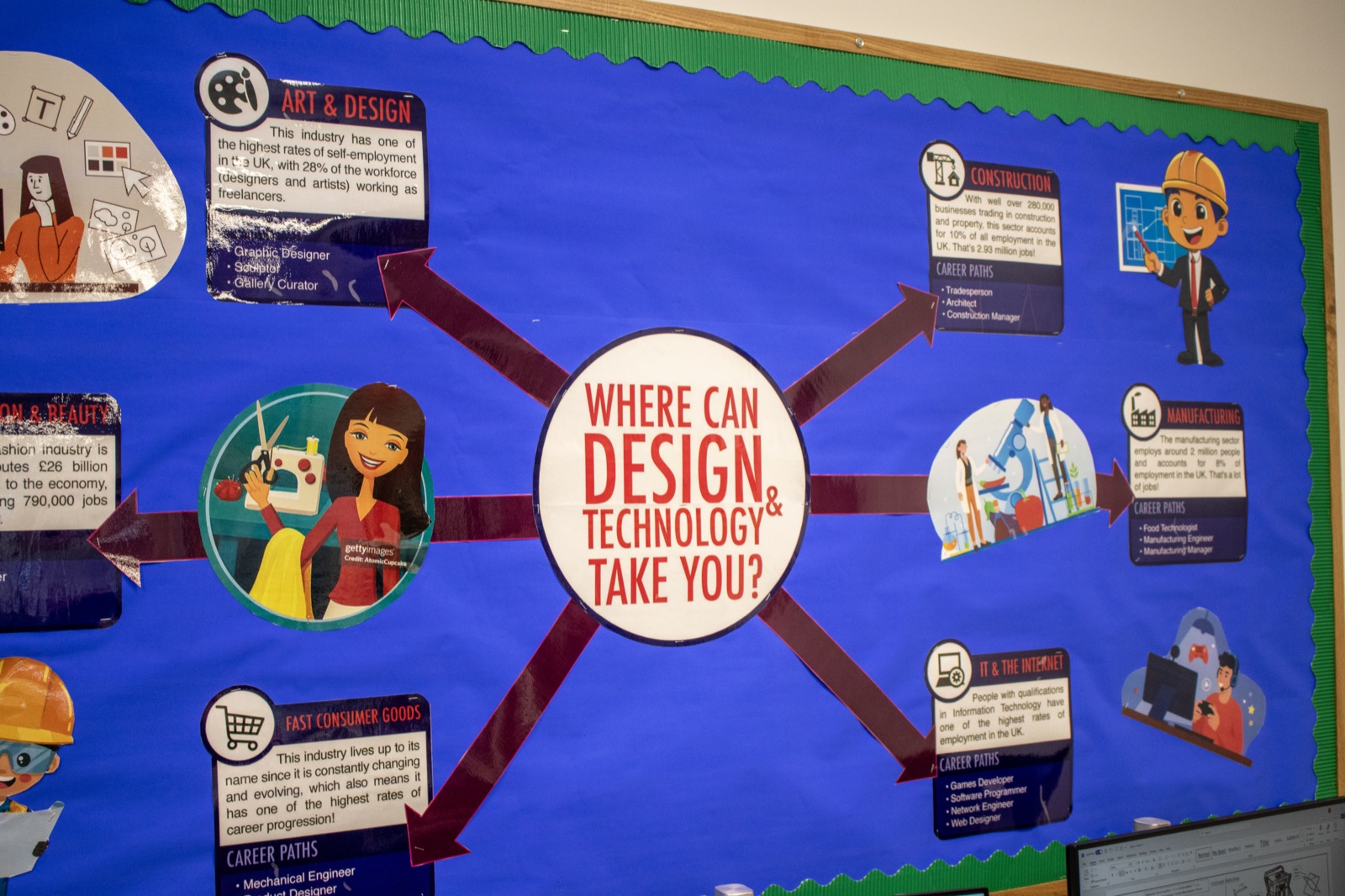
Teaching, architecture, aeronautical and biomedical engineering, quantity surveying, product and interior design, theatre and film, many engineering courses, the building industry and graphic design. It is also a strong entrance qualification for university, whatever the course.
From the KS4 Subject Choice Booklet 2027.
At A Level: Years 13 and 14
GCE Technology & Design
Pupils apply their understanding of materials and components, industrial and commercial practice, quality, health and safety, systems and control, and products; and they communicate ideas, evaluate, design, plan and make.
Units
- AS 1: Paper 1, core area of study; Paper 2, specialist area of study, Product Design (50% of AS; 20% of A Level)
- AS 2: coursework, Product Development: a 10-page design portfolio and manufacturing task (50% of AS; 20% of A Level)
- A2 1: Systems and Control or Product Design: written examination (30% of A Level)
- A2 2: coursework, Product Design and Manufacture: a 20-page design portfolio and manufacturing task (30% of A Level)
The coursework units are the core of the course and demand significant time and consistent effort outside class. Marks weigh heavily on the design portfolio and a high-quality manufactured prototype, so precision and a proactive approach matter throughout.
What helps you succeed
A high level of sketching and technical drawing: freehand sketching, rendering, and detailed 2D and 3D technical drawings to document the design process and justify engineering solutions.
Where it leads
Mechanical and aerospace engineering, product design, CAD technician work, manufacturing engineering, graphic design and UX design.
The department
- Mr N McGovernHead of Department
- Miss H Barry
- Mr B Geoghegan
- Mr S Quigley
- Mr C Smyth
From the school’s Key Stage 4 Subject Choice 2027 and Post 16 Subject Choice 2026 booklets.