
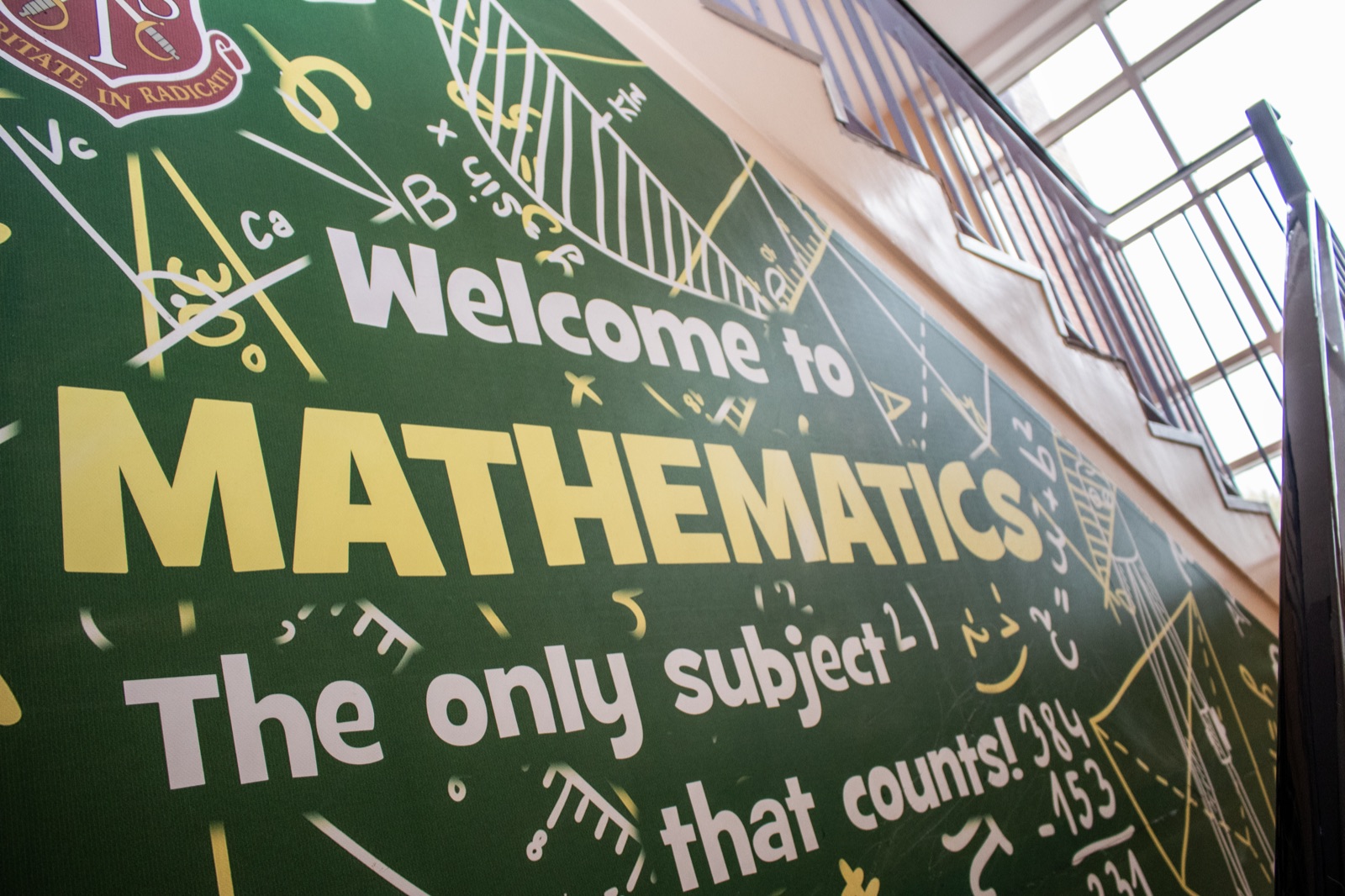
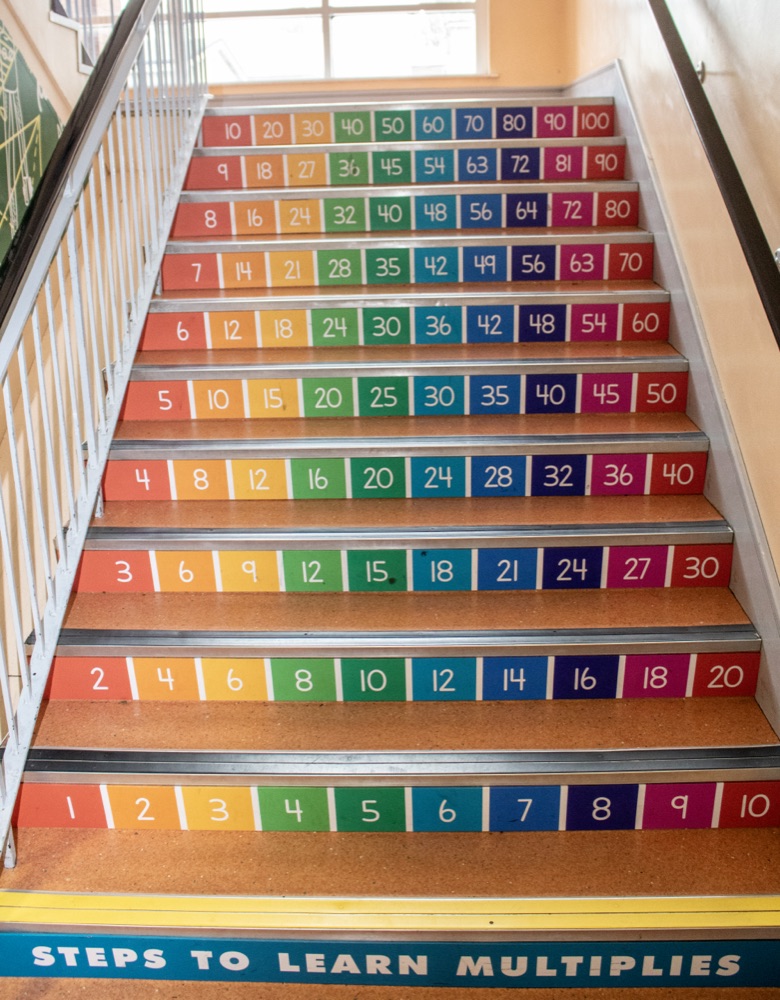
Mathematics is offered throughout the St Paul’s curriculum, from Year 8 to Year 14. It is taught at Key Stage 3 in Years 8 to 10, at GCSE in Years 11 and 12, with GCSE Further Mathematics for pupils who want to go further, and at A Level in Years 13 and 14.
At Key Stage 3: Years 8 to 10
In Year 8, pupils cover the following topics:
- Numeracy: the four rules revisited
- Graphs: conversion graphs
- Statistics: diagrams, pie charts and questionnaires, and also averages, range and frequency polygons
- Estimating: powers and roots, mental maths and estimation
- Algebra: number patterns and function machines
- Transformations: reflections, translations, rotations and enlargement
- Angles: parallel lines, polygons and bearings
- Negative numbers: ordering and rounding
- Percentages and fractions: calculating percentages, and relating percentages, fractions and decimals
- Probability: number line and probability spaces
- Ratio: proportion, and maps and scales
- Area: perimeter and area
- Volume: prisms
- Straight lines: gradients of straight lines and intersecting lines
- Trial and improvement: inequalities and order on a number line
More about Year 8 Maths on stpauls728.org
At GCSE: Years 11 and 12
GCSE Mathematics
There is no coursework or controlled assessment. Pupils sit the first module at the end of Year 11 and the second at the end of Year 12. Pupils on the one-year GCSE Mathematics course attend one twilight class each week.
How it is assessed
- Module 1: calculator paper (45% of the GCSE)
- Module 2: two papers, one non-calculator and one calculator, sat on the same day with a 10 or 15 minute break between them (55% of the GCSE)
What helps you succeed
- Working hard from the start
- Having the correct equipment: calculator, protractor, ruler and the rest
- A wish to succeed, and the work to go with it
Where it leads
Joinery, engineering of all types, electrician, actuary, mechanic, accountant, interior design, veterinary work and nursing.
GCSE Further Mathematics
Builds on the skills developed in Key Stage 3 and GCSE Mathematics. It is designed to broaden the experience of pupils whose mathematical ability is above average and who are interested in AS or A Level Mathematics, or in subjects that need Mathematics at a higher level. Pupils attend one twilight class each week and sit all three modules at the end of Year 12. Calculators are allowed throughout the course and in the examinations.
Units
- Unit 1: Pure Mathematics (50%)
- Unit 2: Mechanics (25%)
- Unit 3: Statistics (25%)
What helps you succeed
- A love for and enjoyment of all aspects of mathematics
- Willingness to put in extra time and hard work to cover the course
Where it leads
Actuarial work, engineering of all types, accountancy, statistics, medicine (doctor, nurse, vet), business and finance, natural science, computing, pharmacy, architecture and the mathematical sciences.
From the KS4 Subject Choice Booklet 2027.
At A Level: Years 13 and 14
GCE Mathematics
Pupils can take the AS course as a final qualification, or the AS units plus the A2 units for the full A Level. The full award is based on the AS units (40%) and the A2 units (60%). It is assessed by written examinations only, with no coursework or controlled assessment: two AS papers at the end of Year 13, and two further papers at the end of Year 14.
Units
- AS 1: Pure Mathematics (60% of AS; 24% of A Level)
- AS 2: Applied Mathematics, Mechanics and Statistics (40% of AS; 16% of A Level)
- A2 1: Pure Mathematics (36% of A Level)
- A2 2: Applied Mathematics, Mechanics and Statistics (24% of A Level)
The course aims to give pupils a strong foundation for further study, to extend their mathematical skills, to apply mathematics in other fields, to reason logically, to solve challenging problems and to communicate mathematically.
What helps you succeed
- A love for and enjoyment of all aspects of mathematics
- Willingness to work hard and submit work on time
- A desire to succeed
- A positive attitude
Where it leads
Mathematics, economics, medicine, architecture, engineering, business and finance, accountancy, computer science, natural science and education.
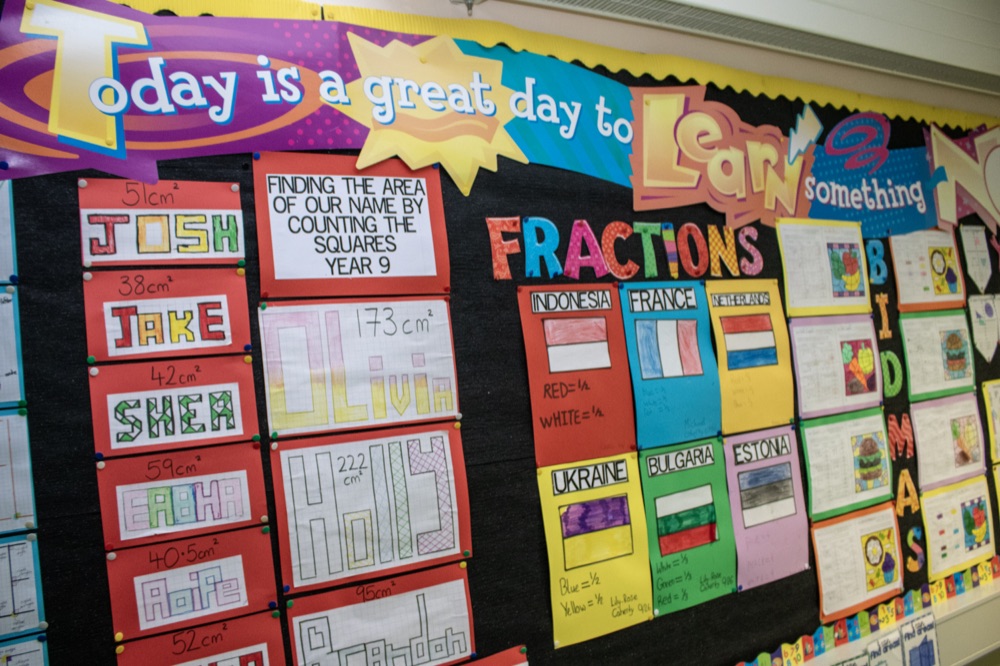
The department
- Mrs Á MallieHead of Department
- Miss O MurrayAssistant Head of Department
- Miss C Conlon
- Mrs A Conlon
- Mr M Doyle
- Miss D Grant
- Mrs L Hollywood
- Mrs Á Kearney
- Miss A Keenan
- Mrs A McBrien
- Mrs C McCartan
- Mr A Murphy
- Miss S Rice
- Mrs L Scott
From the school’s Key Stage 4 Subject Choice 2027 and Post 16 Subject Choice 2026 booklets.