
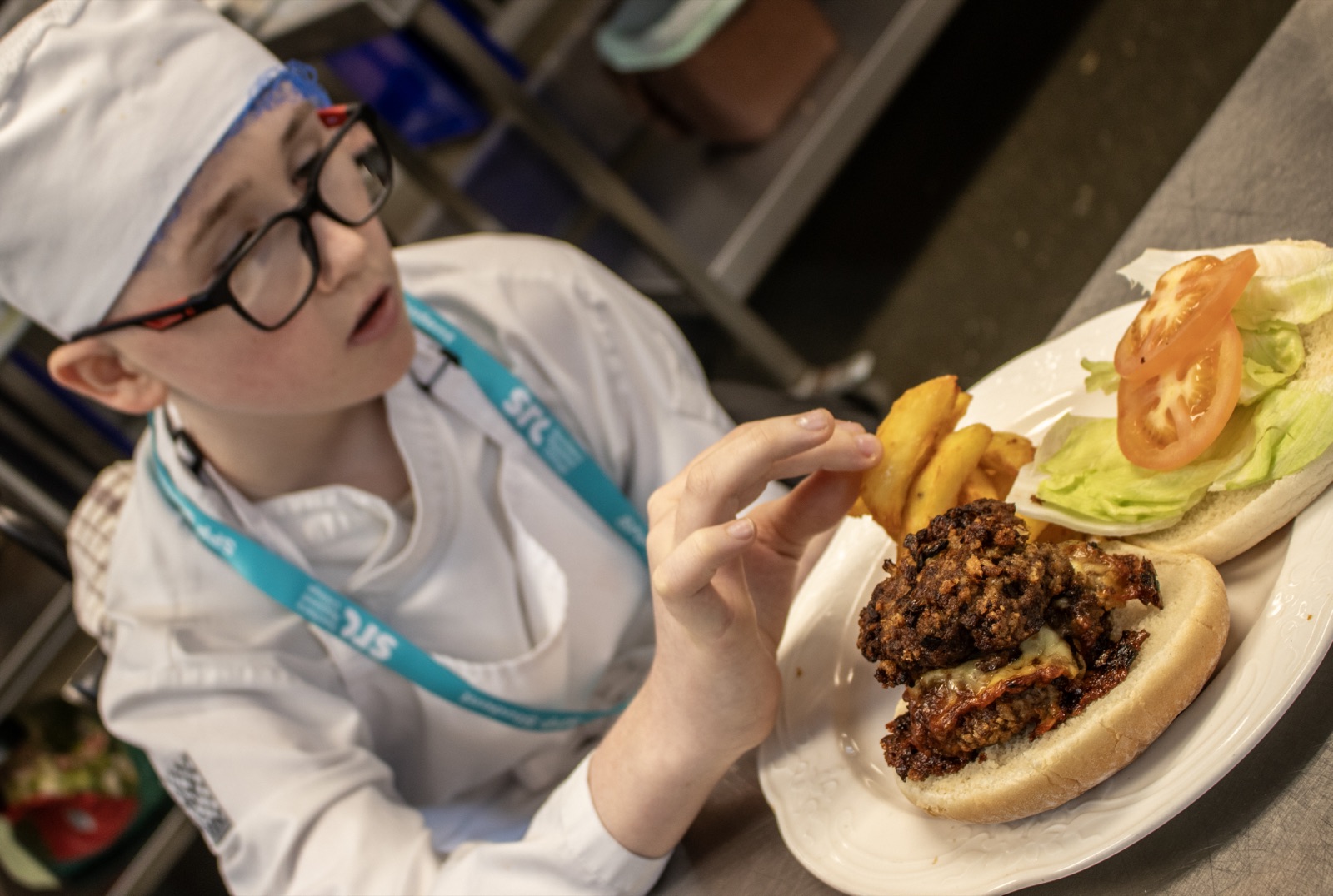
Home Economics is offered in the St Paul’s curriculum from Year 8 to Year 12. It is taught at Key Stage 3 in Years 8 to 10, and in Years 11 and 12 as GCSE Food & Nutrition and Level 2 Cookery.
At Key Stage 3: Years 8 to 10
In Year 8, the Home Economics topics are:
- Introduction to Home Economics
- Safety and hygiene rules
- Basic first aid
- Measuring
- Table setting
- Cooker management
- Dietary guidelines
- Why we eat
- Food storage
- Choosing food
- Family roles
- Conflict and compromise
- Needs of family members
- Types of shops
- Labelling
- Budgeting
Further information and recipe booklets are available online.
More about Year 8 Home Economics on stpauls728.org
At GCSE: Years 11 and 12
GCSE Food & Nutrition
There are two components: one externally assessed (50%) and one internally assessed (50%). Both assessments are completed at the end of the course. Pupils gain knowledge and understanding of the food we consume, where it comes from and how it is produced; the foods we should eat to maintain good health; the differing needs of various groups of people; prominent health issues in today’s society; how to shop effectively; why people choose certain foods; and affordability when it comes to food and food choice. They also develop practical food preparation, cooking and presentation skills.
Units
- Component 1: Food and Nutrition (examination, 50%)
- Component 2: Practical Food and Nutrition (controlled assessment, 50%)
Where it leads
The course helps to prepare young people for adult life and independent living and provides an excellent foundation for those who wish to work in food-related industries and/or undertake further study in this area. The specification allows pupils to progress to GCE and/or other courses of study or employment.
Level 2 Cookery
Learners have the opportunity to learn for work, through work and about work, with real outcomes that give them skills for life. There is formal observational assessment of products within each unit and structured written questions to check the learner’s understanding of the content. The learner can answer questions orally, and the teacher validates the answers by providing a written record. All evidence is logged in a portfolio.
Units
- Contemporary Cuisine: the basic cooking principles required by cooks and chefs in the catering industry when preparing and cooking a range of starters, main courses and desserts. Learners apply legislative requirements when handling food, work safely and hygienically in the catering kitchen, select and use appropriate equipment correctly, and develop creative skills in the finishing and presentation of products for service. The unit also offers an opportunity to understand the scope of the catering industry, including career opportunities.
- Patisserie and Baking: the basic baking principles required by pastry chefs in the catering industry. Learners apply legislative requirements when handling food, work safely and hygienically in the catering kitchen, select and use appropriate equipment correctly, and develop the creative skills to decorate and present products for service. The unit also offers an opportunity to understand the breadth of the catering industry, including career opportunities.
Where it leads
The course helps to prepare young people for adult life and independent living and provides an excellent foundation for those who wish to work in food-related industries.
From the KS4 Subject Choice Booklet 2027.
The department
- Mrs L McConvilleHead of Department
- Mr E McQuillan
- Mrs J O'Hare
From the school’s Key Stage 4 Subject Choice 2027 and Post 16 Subject Choice 2026 booklets.