
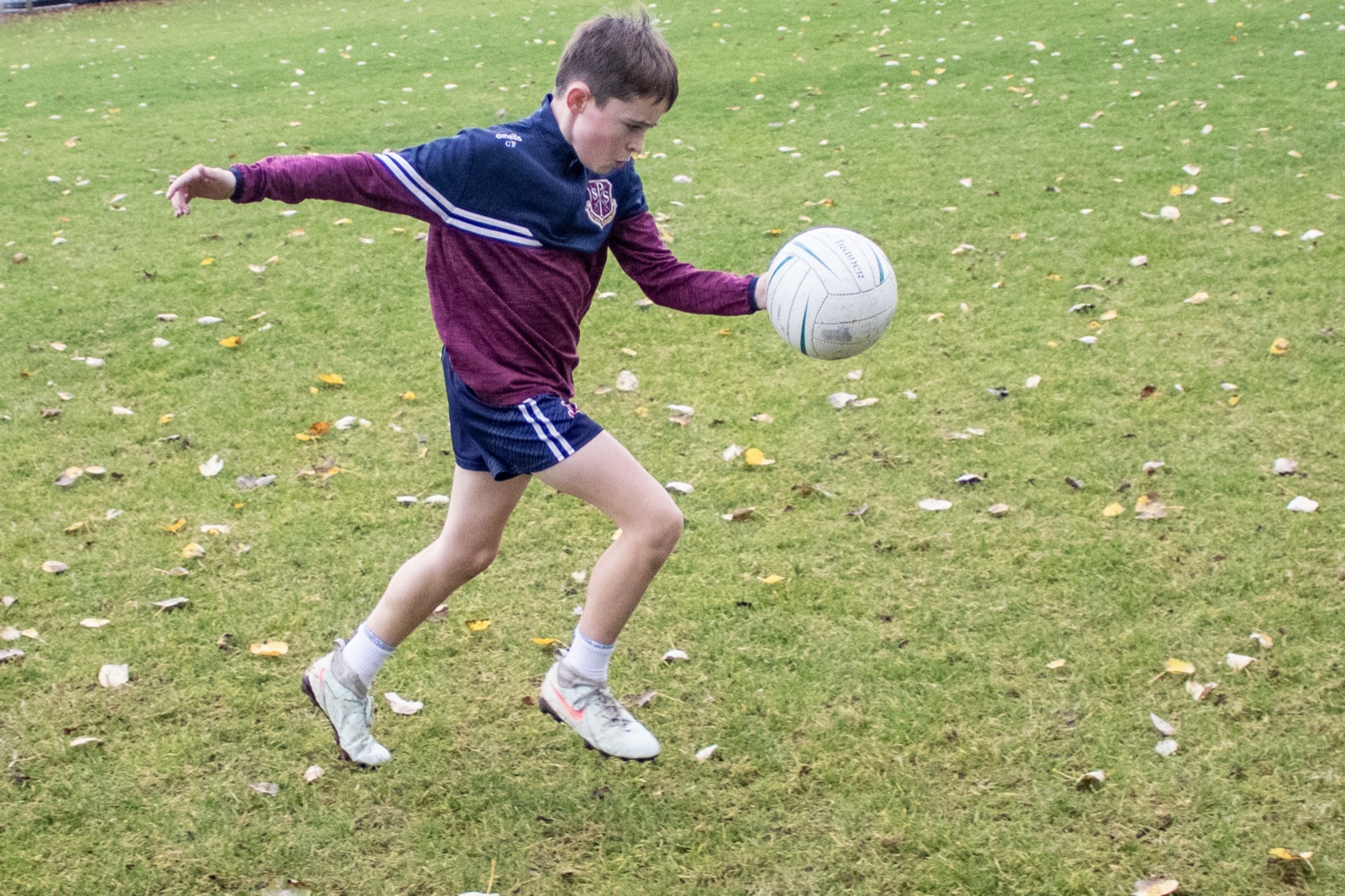
Physical Education is offered throughout the St Paul’s curriculum, from Year 8 to Year 14. It is taught at Key Stage 3 in Years 8 to 10; in Years 11 and 12 pupils can take GCSE PE or the BTEC Level 1 / Level 2 First Award in Sport, and in Years 13 and 14 GCE Physical Education or BTEC Sport (Performance & Excellence).
At Key Stage 3: Years 8 to 10
In Year 8, Physical Education is organised by term.
Boys:
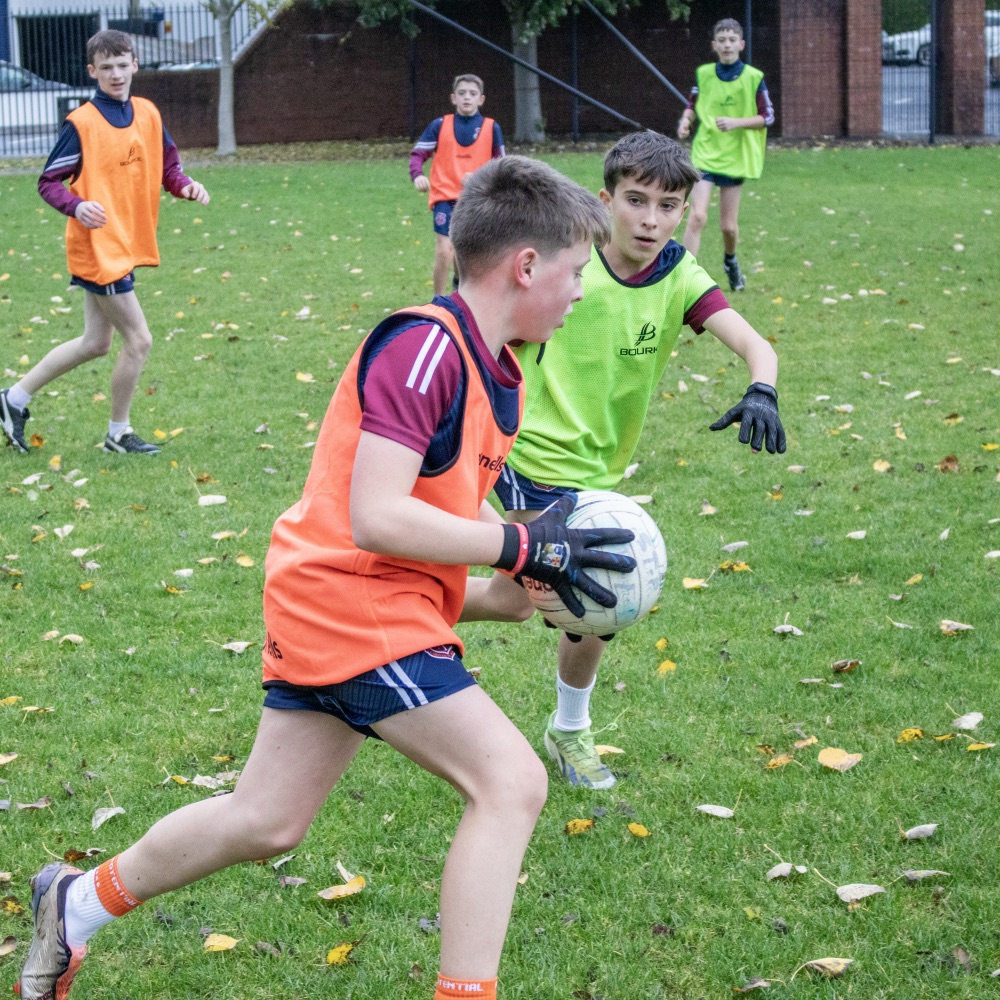
- Term 1: fitness testing (bleep test, 10 x 5m sprint, sit ups, standing broad jump, grip strength, sit and reach) and Gaelic football
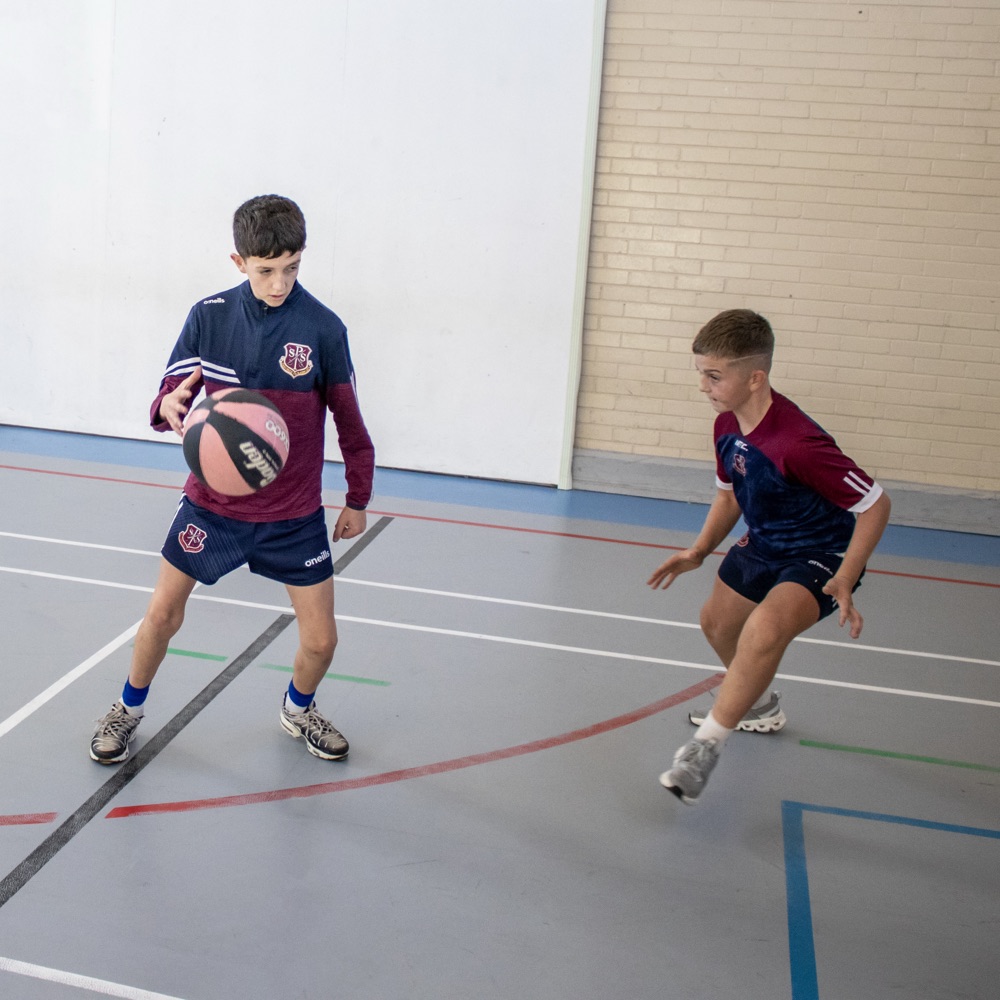
- Term 2: cross country, basketball and swimming
- Term 3: athletics and team games
Girls:
- Term 1: fitness training (bleep test, 10 x 5m sprint, sit ups, standing broad jump, grip strength, sit and reach), Gaelic games, camogie and Gaelic football
- Term 2: cross country, dance and swimming
- Term 3: netball, bench ball, dodge ball, athletics and rounders
All pupils are expected to participate in PE. A pupil who cannot take part needs a note from their parents, and extended periods of absence need a doctor’s note. Pupils who do not participate, including those with a note, go to one of the PE classrooms to do theoretical PE, which concentrates on the knowledge, skills and understanding of exercise and sport.
More about Year 8 Physical Education on stpauls728.org
At GCSE: Years 11 and 12
GCSE PE
Assessed by a practical assessment (40%) and a terminal exam (60%). Pupils perform three physical activities and/or sports: two team and one individual, or one team and two individual.
Units
- 1: Health, Training and Exercise
- 2: Exercise Physiology
- 3: Movement Analysis
- 4: Psychology of Sport and Physical Activity
- 5: Socio-cultural Issues in Physical Activity and Sport
What helps you succeed
- Being interested in exercise, dance or sport (any sport)
Where it leads
PE Teacher, Sports coach, Sports Therapist, Physiotherapist, Occupational Therapist, Sports Development Officer, Personal Trainer.
BTEC Level 1 / Level 2 First Award in Sport
The qualification is aimed at everyone who wants to find out more about the sport industry. Pupils carry out tasks and assignments throughout the course, which the teacher marks, so they receive feedback on how they are getting on. The assessment for Unit 1: Fitness for Sport and Exercise is an onscreen test marked by Pearson.
Units
Three mandatory units cover the underpinning knowledge and skills required for the sports sector:
- Fitness for sport and exercise
- Practical performance in sport
- Applying the principles of personal training
Pupils then choose one further unit, covering areas such as:
- The mind and sports performance
- The sports performer in action
- Leading sports activities
From the KS4 Subject Choice Booklet 2027.
At Post-16: Years 13 and 14
GCE Physical Education
The specification is designed to allow pupils to develop an appreciation of physical education in a wide range of contexts, integrating theory and practice with an emphasis on the application of theoretical knowledge.
Units
- AS Unit 1: Exploring physical education (written examination, 1¾ hours, 24% of qualification)
- AS Unit 2: Improving personal performance in physical education (non-exam assessment, 16% of qualification)
- A2 Unit 3: Evaluating physical education (written examination, 2 hours, 36% of qualification)
- A2 Unit 4: Refining personal performance in physical education (non-exam assessment, 24% of qualification)
Unit 1 content:
- Exercise Physiology, Performance Analysis and Training: performance analysis; analysis of movement; musculo-skeletal system; preparation and training methods; energy systems, application and recovery
- Sport Psychology: personality; stress, arousal and anxiety; motivation and self-efficacy
- Skill Acquisition: skill, ability and learning
- Sport and Society: sport, culture and the emergence of modern sport; social differentiation
Unit 2 content:
- Exercise Physiology, Performance Analysis and Training: short- and long-term effects of exercise; diet, nutrition and performance; biomechanical principles
- Sport Psychology: attitude; aggression and social facilitation; group dynamics and leadership; attribution theory
- Skill Acquisition: information processing
- Sport and Society: ethics and deviance; media, participation and globalisation; mass participation to elite sport
Where it leads
The leisure industry has become a big business and has been considered the fastest growing industry in the UK. Examples of employment include Exercise Physiologist, Sports physiotherapist, Athletic Trainer, Sports coach, Sports instructor, Sports development officer, PE teacher, Sports Data Analyst or Statistician, Sports lawyer, Sports Journalism or Photography, and Sports marketing, PR, communications and social media. A Level Physical Education is a well-respected, academic A Level and is considered to be a science subject by many major universities.
BTEC Sport (Performance & Excellence)
These BTEC qualifications were developed in the sport and active leisure sector to give pupils the opportunity to enter employment in the sector or to progress to higher education qualifications. They introduce the sector to pupils looking to build a career in sport, within occupational areas that include exercise and fitness, coaching and leadership, sports development and the outdoors.
Units
Pearson BTEC Level 3 National Extended Certificate in Sport (single award): equivalent in size to one A Level, with four assessed units, three mandatory and one selected internally. Two of these units are assessed by external exam. The three mandatory units are:
- Unit 1: Anatomy and Physiology (external exam)
- Unit 2: Fitness Training and Programming for Health, Sport and Well-being (external)
- Unit 3: Professional Development in the Sports Industry (coursework)
Pearson BTEC Level 3 National Diploma in Sport (double award): equivalent in size to two A Levels, with nine units, of which six are mandatory and three are external. Mandatory content is 75% and the externally assessed exam content is 45%. The six mandatory units are:
- Unit 1: Anatomy and Physiology (external exam)
- Unit 2: Fitness Training and Programming for Health, Sport and Well-being (external exam)
- Unit 3: Professional Development in the Sports Industry (coursework)
- Unit 4: Sports Leadership (coursework)
- Unit 22: Investigating Business in the Sport and Active Leisure Industry (external exam)
- Unit 23: Skill Acquisition in Sport (coursework)
Where it leads
The course provides progression to the workplace, either directly or via study at a higher level. BTEC Nationals are accepted by over 150 UK universities and higher education institutes for relevant degree programmes, either on their own or in combination with A Levels.
The department
- Mr M O'RourkeHead of Department
- Mr C Burns
- Miss M Downey
- Mrs D Duffy
- Mr S Kearney
- Mrs P O'Hare-Armstrong
- Mr M Rafferty
- Mrs C Savage
- Mr B Shannon
From the school’s Key Stage 4 Subject Choice 2027 and Post 16 Subject Choice 2026 booklets.