
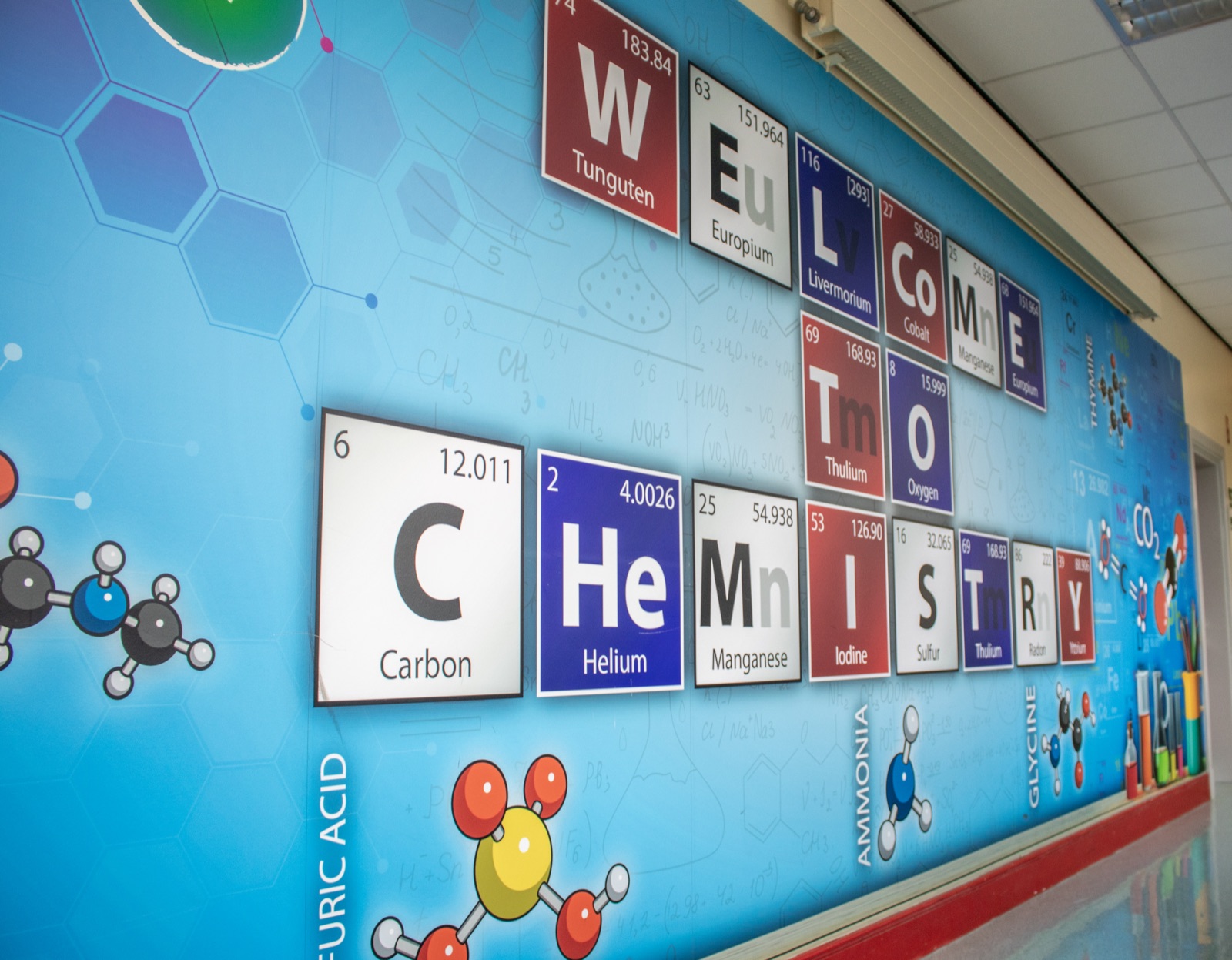
Science is offered throughout the St Paul’s curriculum, from Year 8 to Year 14. It is taught at Key Stage 3 in Years 8 to 10, at GCSE as Single or Double Award, with an applied Level 2 course, in Years 11 and 12, and at A Level as Biology, Chemistry, Physics and Environmental Technology in Years 13 and 14.
At Key Stage 3: Years 8 to 10
In Year 8, Science topics include:
- Investigating Science
- Materials and Matter
- Energy and Forces
- Magnetism and Electricity
- Classification
- Adaptation
- Environment and Pollution
- Food chains and webs
- Cells and body systems
There is differentiation within these topics for pupils of differing abilities. Pupils cover the attainment targets for Chemistry, Biology and Physics. Attainment target 1 is practical investigative work, and it is covered in each topic. An assessment is completed at the end of every topic, and each pupil has a self assessment booklet which they use after each assessment.
More about Year 8 Science on stpauls728.org
At GCSE: Years 11 and 12
GCSE Double Award Science
Units B1, C1 and P1 are assessed during Year 11; units B2, C2 and P2 in June of Year 12. The Practical Skills unit has two parts: Booklet A, three pre-release practicals carried out in the final year and marked externally; and Booklet B, a written examination in June of Year 12 (30 minutes each for Biology, Chemistry and Physics).
Units
- B1: Cells, Living Processes and Biodiversity
- C1: Structures, Trends, Chemical Reactions, Quantitative Chemistry and Analysis
- P1: Motion, Force, Moments, Energy, Radioactivity, Nuclear Fission and Fusion
- B2: Systems, Genetics, Microorganisms and Health
- C2: Further Chemical Reactions, Rates and Equilibrium, Calculations and Organic Chemistry
- P2: Waves, Light, Electricity, Magnetism, Electromagnetism and Space Physics
- Practical Skills
What helps you succeed
A high level of scientific skill, with well-developed literacy, numeracy and communication.
Where it leads
Any scientific career, for example agriculture, architecture, astrophysics, beautician, dentistry, education, engineering, healthcare, horticulture, medicine, nursing, sports science and veterinary work.
GCSE Single Award Science
In Year 11 each pupil sits one module in Biology, Chemistry or Physics; the other two are assessed in Year 12. The four modules (Biology, Chemistry, Physics and Practical Skills) each carry 25%. The Practical Skills assessment in Year 12 is three investigations completed in class, marked externally and assessed in a written examination.
Units
- Biology: external examination only
- Chemistry: external examination only
- Physics: external examination only
- Practical Skills: in two parts, one in the classroom but externally marked, and a final paper in the summer of Year 12
What helps you succeed
Good scientific, numeracy, literacy and communication skills; following instructions, organising work and managing time well.
Where it leads
Any vocational science course, for example agriculture, beauty, hairdressing, nursing and sport.
OCN NI Level 2 Certificate in Applied Science
Units are achieved through evidence that is internally set, assessed and verified. Pupils keep a portfolio of evidence showing they have met the required skills, are assessed on their practical skills, and undertake research or projects related to the course.
Units
- Physical Processes
- Life Processes and Living Things
- Materials and their Chemical Properties
What helps you succeed
A level of skill gained at Key Stage 3 in science, numeracy, literacy and communication.
Where it leads
Further qualifications in applied science at a higher level, or the study of science in greater depth; it also supports progression to employment in science, technology, engineering and mathematics.
From the KS4 Subject Choice Booklet 2027.
At A Level: Years 13 and 14
GCE Biology
Provides a basis for further study of Biology and related courses, and is relevant to science, engineering and medicine, and to commerce and public service, where problem-solving and practical skills are valued. It also builds understanding of how biological developments affect the environment, and of ethical and cultural issues.
Units
- AS 1: Molecules and Cells: written examination, 1 hour 30 minutes, six to eight structured questions and an essay (37.5% of AS; 15% of A Level)
- AS 2: Organisms and Biodiversity: written examination, 1 hour 30 minutes (37.5% of AS; 15% of A Level)
- AS 3: Practical Skills in AS Biology: written examination of practical skills, 1 hour, and internal practical assessment moderated by CCEA (25% of AS; 10% of A Level)
- A2 1: Physiology, Co-ordination and Control, and Ecosystems: written examination, 2 hours 15 minutes (24% of A Level)
- A2 2: Biochemistry, Genetics and Evolutionary Trends: written examination, 2 hours 15 minutes (24% of A Level)
- A2 3: Practical Skills in Biology: written examination, 1 hour 15 minutes, and internal practical assessment moderated by CCEA (12% of A Level)
GCE Chemistry
A two-year course: AS then A2, each with two theory papers, a practical paper and a Practical Skills examination. The AS can be taken as a qualification on its own. AS builds on GCSE physical and inorganic chemistry and introduces organic chemistry; A2 moves on to analytical chemistry, transition metals, electrochemistry and organic nitrogen chemistry. Prescribed practicals run through both years.
Units
- AS 1: Basic Concepts in Physical and Organic Chemistry: 1 hour 30 minutes (40% of AS; 16% of A Level)
- AS 2: Further Physical and Inorganic Chemistry and an Introduction to Organic Chemistry: 1 hour 30 minutes (40% of AS; 16% of A Level)
- AS 3: Basic Practical Chemistry: practical booklet A in the laboratory and booklet B in the examination hall, 1 hour 15 minutes each (20% of AS; 8% of A Level)
- A2 1: Further Physical and Organic Chemistry: 2 hours (40% of A2; 24% of A Level)
- A2 2: Analytical, Transition Metals, Electrochemistry and Organic Nitrogen Chemistry: 2 hours (40% of A2; 24% of A Level)
- A2 3: Further Practical Chemistry: booklets A and B, 1 hour 15 minutes each (20% of A2; 12% of A Level)
What helps you succeed
- Logical thinking
- Analysis and data handling
- Mathematical skills
- Observation
- A good work ethic
- Problem solving
- Good communication and comprehension
Where it leads
Medicine, dentistry, radiology, forensics, chemical synthesis, teaching, pharmacy and chemical engineering.
GCE Physics
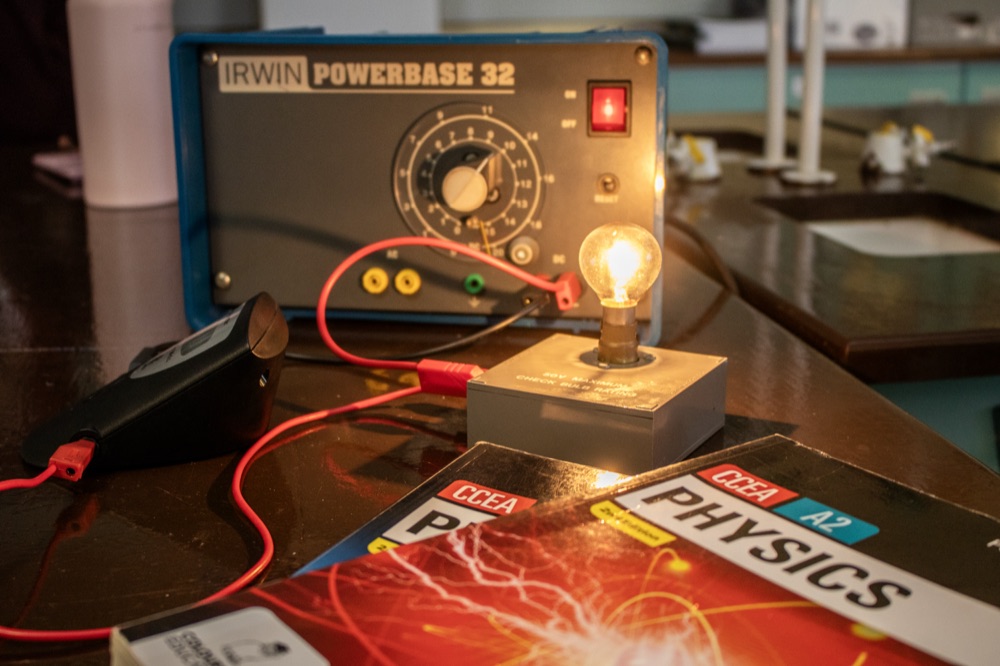
Builds on the Physics strand of GCSE Science and links theory with experiment. AS 1 and AS 2 are each one written paper; all A2 written papers include a synoptic element. Practical examinations take place in the Physics laboratory. There is no coursework.
Units
- AS 1: Forces, Energy and Electricity (1¾ hour written examination)
- AS 2: Waves, Photons and Astronomy (1¾ hour written examination)
- AS 3: Practical Techniques (1 hour practical examination) and Data Analysis (1 hour written paper)
- A2 1: Deformation of Solids, Thermal Physics, Circular Motion, Oscillations and Atomic and Nuclear Physics (2 hour written paper)
- A2 2: Fields, Capacitors and Particle Physics (2 hour written paper)
- A2 3: Practical Techniques (1 hour practical examination) and Data Analysis (1 hour written paper)
Where it leads
Further study of Physics and related subjects such as Applied Mathematics, Astronomy, Astrophysics and many branches of Engineering; relevant to Computer Science, Pharmacy, Medicine, Biochemistry and Dentistry; and a basis for direct employment in science, engineering, medicine and information technology.
GCE Environmental Technology
Emphasises managing the planet’s resources more effectively: sustainable living and renewable energy technologies.
Units
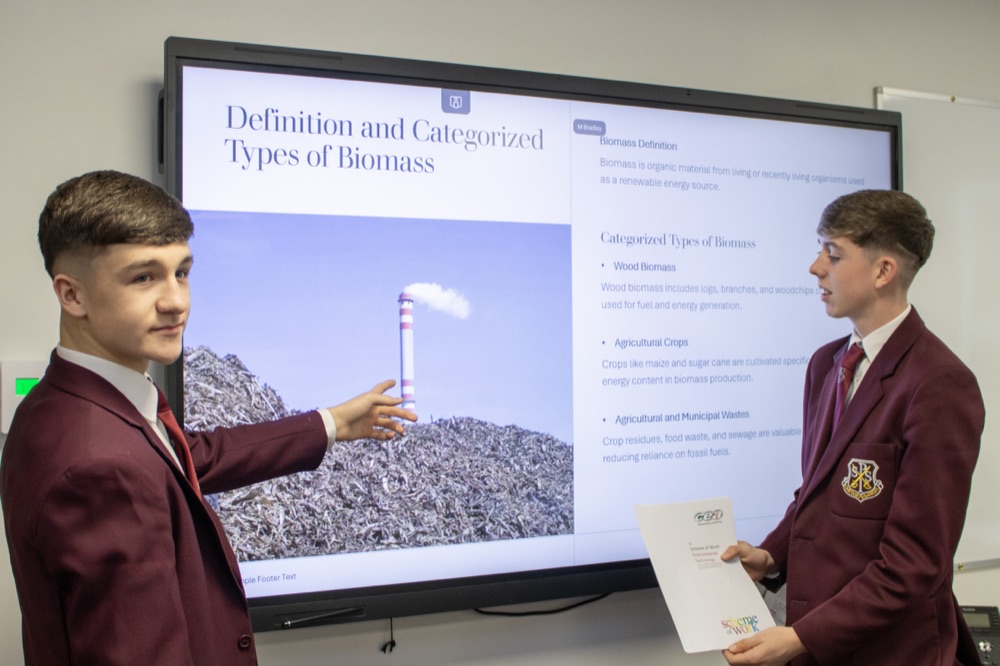
- AS 1: The Earth’s Capacity to Support Human Activity: declining fossil fuel supplies and renewable technologies such as wind, solar and biomass (written examination; 40% of AS, 20% of A Level)
- AS 2: Renewable Energy Technologies: researching and evaluating renewable sources in a technical report (internal assessment; 60% of AS, 30% of A Level)
- A2 1: Building and Managing a Sustainable Future: improving the environmental performance of buildings (written examination; 40% of A2, 20% of A Level)
- A2 2: Environmental Building Performance and Measurement: a technical report on the nine elements of the Code for Sustainable Homes (internal assessment; 60% of A2, 30% of A Level)
Where it leads
Environmental consultancy, renewable energy engineering, sustainability management, environmental science, urban planning and green building design.
The department
- Miss K TraynorHead of Department
- Mrs M BradleyJoint Assistant Head of Department
- Dr N BreslinJoint Assistant Head of Department
- Mrs M RaffertyJoint Assistant Head of Department
- Mrs L Carragher
- Mr C Dillon
- Miss D Hilditch
- Mrs A Kimbley
- Miss S McGeough
- Miss L McNulty
- Miss A O'Neil
- Mrs L Taylor
- Mrs G Toal
From the school’s Key Stage 4 Subject Choice 2027 and Post 16 Subject Choice 2026 booklets.