Music is offered throughout the St Paul’s curriculum, from Year 8 to Year 14. It is taught at Key Stage 3 in Years 8 to 10; in Years 11 and 12 pupils can take GCSE Music or Level 2 Performance Skills (Music), and in Years 13 and 14 A Level Music.
At Key Stage 3: Years 8 to 10
In Year 8, the Music topics are pulsation, the building bricks of music, time keeping, instruments of the orchestra, and illustrative and film music. The curriculum has three main elements, Listening, Composing and Performing, and each is assessed through these topics.
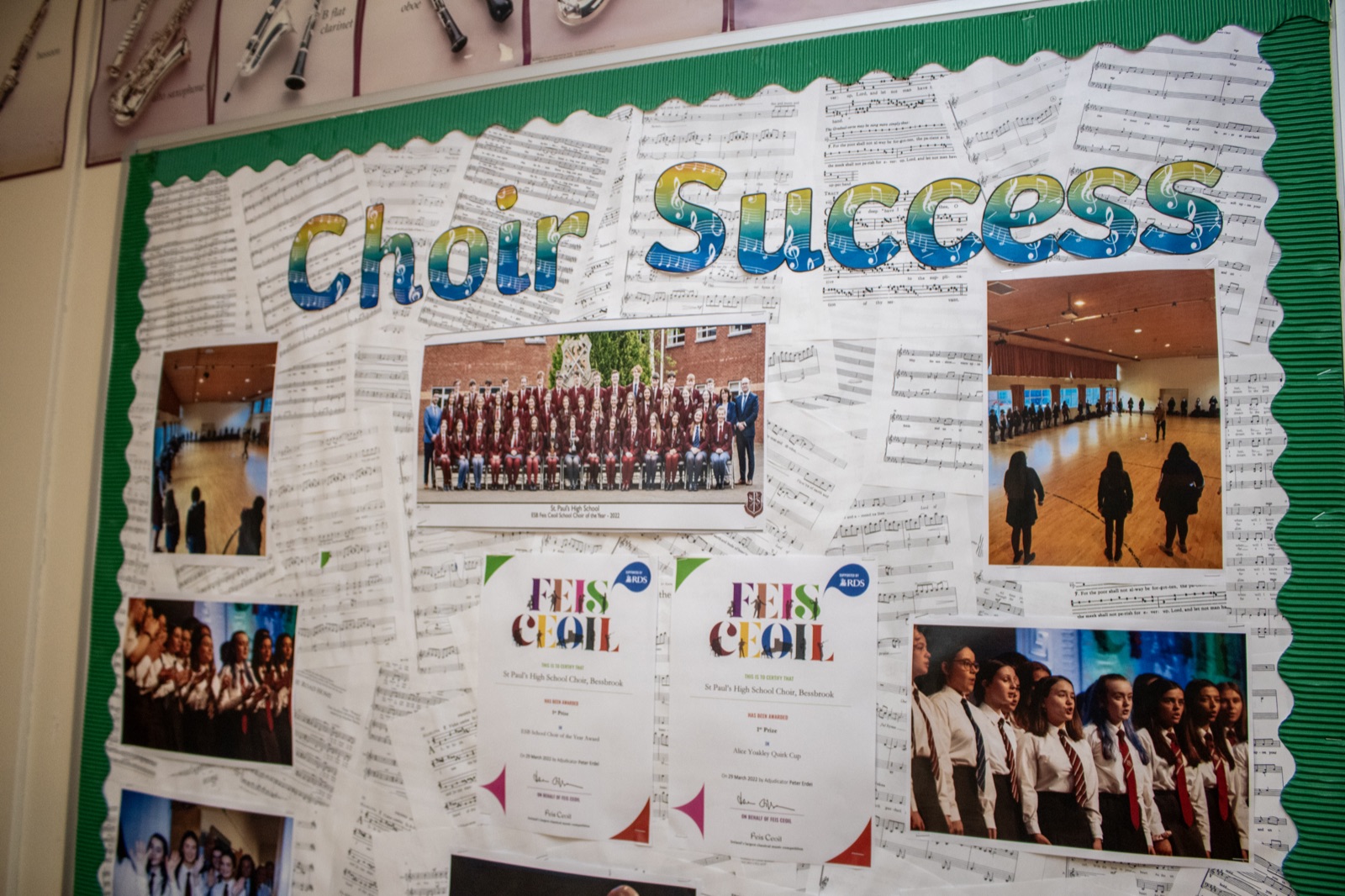
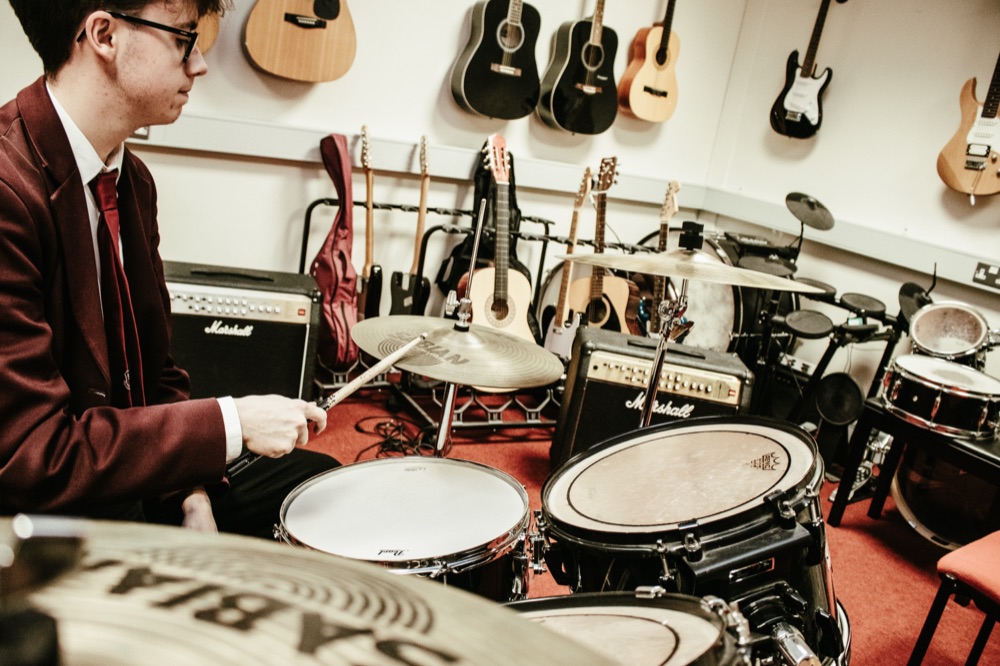
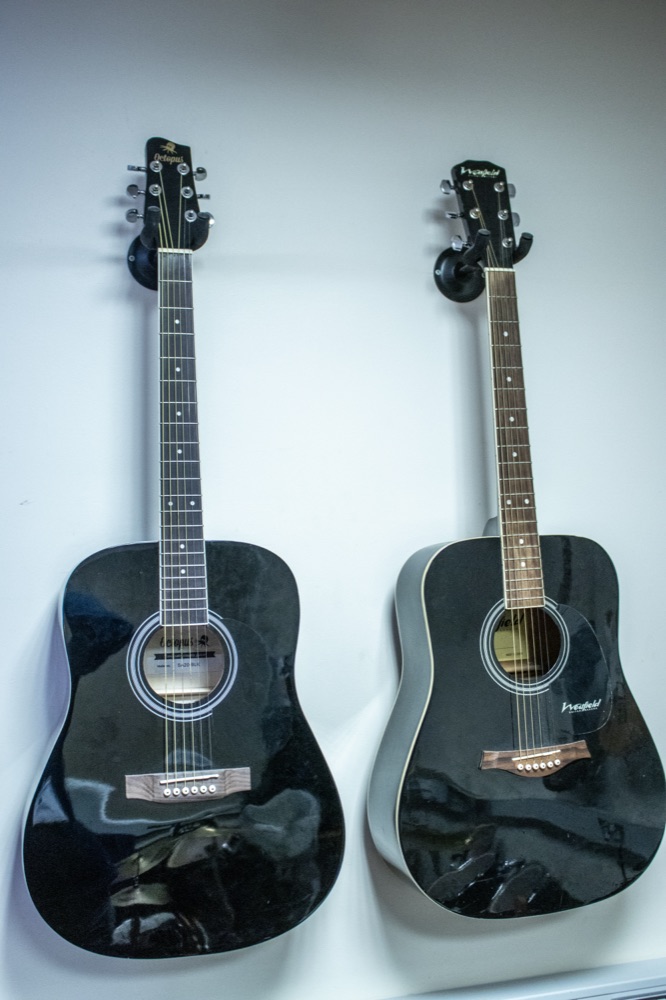
Tuition is offered in violin, viola, cello, double bass, guitar, flute, oboe, clarinet, saxophone, singing, trumpet, trombone, French horn and advanced guitar. Extra-curricular activities in Music include choir, orchestra, traditional group and the ethnic percussion ensemble (African drums).
More about Year 8 Music on stpauls728.org
At GCSE: Years 11 and 12
GCSE Music
Assessed through composing and appraising (30%), performing and appraising (35%) and listening and appraising (35%).
Units
- Western Classical Music 1600 to 1910
- Film Music
- Musical Traditions of Ireland
- Popular Music 1980 to the present day
What helps you succeed
- Enthusiasm for the subject and commitment to learn an instrument or singing (the minimum requirement)
- Traditional Irish musicians do not require grades
- Ability to read staff notation is recommended though not essential
Where it leads
TV Producer/Director, Advertising, Studio work (sound engineer, mixer, DJ), Music Education and Music Therapy, Composer (film music, radio jingles, song-writing), Performer (singer, instrumentalist, session musician), Music publishing/Music Librarian, Theatre manager/Actor/Stage manager, Administrator of a theatre-based company (ballet, opera, musical theatre).
Level 2 Performance Skills (Music)
Pupils extend their skills, knowledge and understanding of the entertainment industry, develop their own strengths and interests, and progress to giving a final performance. They produce a portfolio of work and give a performance; the final rehearsal and performance may be externally moderated as a live performance or pre-recorded using video or DVD. There is no written external examination or test: all units are internally assessed, with external moderation. The qualification builds on the knowledge, understanding and skills developed through music, and also includes activities that allow pupils to research opportunities in the entertainment industry, for example by exploring topics such as health and safety.
Units
- Unit 1: Working in the Performing Arts Industry
- Unit 2: Develop Technique for Performance
- Unit 3: Rehearse and Perform
Where it leads
Pupils acquire and develop fundamental practical skills in the art of performance. Developing and demonstrating their skills in performing in front of an audience can open doors to further related study and/or employment.
From the KS4 Subject Choice Booklet 2027.
At A Level: Years 13 and 14
GCE Music
Pupils use the skills of listening, composing and performing acquired at GCSE at a more advanced level.
Units
- AS Unit 1: Performance (externally assessed, 32.5% of AS, 13% of A Level)
- AS Unit 2: Composition (internally assessed, externally moderated, 32.5% of AS, 13% of A Level)
- AS Unit 3: Responding to Music (two external listening and written papers, 35% of AS, 14% of A Level)
- A2 Unit 1: Performance (externally assessed, 19.5% of A Level)
- A2 Unit 2: Composition (internally assessed, externally moderated, 19.5% of A Level)
- A2 Unit 3: Responding to Music (two external listening and written papers, 21% of A Level)
What helps you succeed
- AS: Grade 4 Instrumental/Vocal
- A2: Grade 6 Instrumental/Vocal
Where it leads
Music therapist, Musician, Private music teacher, Teacher, Sound technician (broadcasting/film/video), Arts administrator, Broadcast engineer, Community arts worker, Event organiser, Radio broadcast assistant, Radio producer, Theatre stage manager, DJ, Piano Tuner.
The department
- Miss B McAvoyHead of Department
- Mrs J Doran
- Miss C Hughes
- Mr C Murphy
- Mr P Slane
From the school’s Key Stage 4 Subject Choice 2027 and Post 16 Subject Choice 2026 booklets.