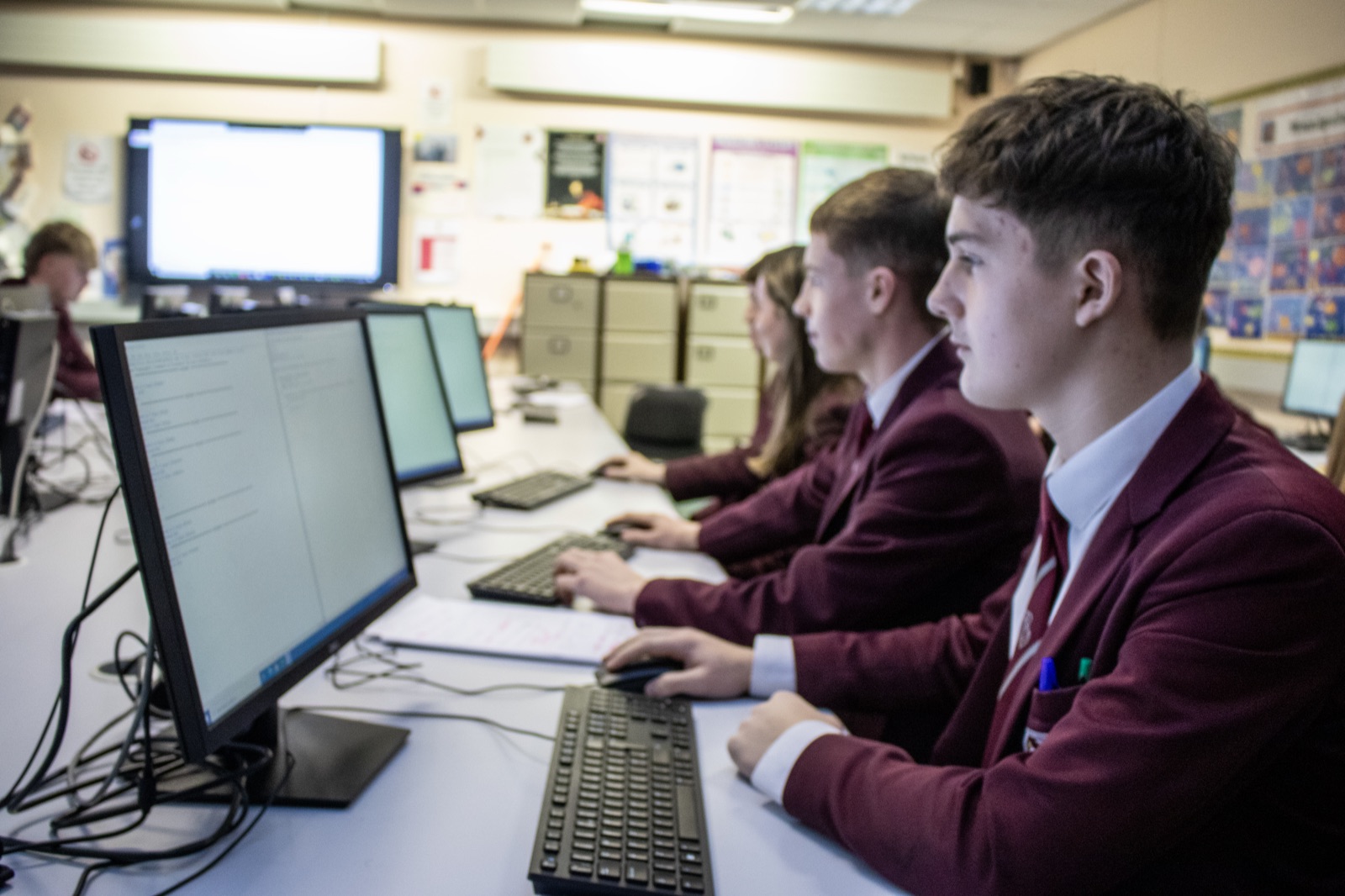
Computing and digital technology are offered throughout the St Paul’s curriculum, from Year 8 to Year 14. ICT is taught as a subject in Year 8 and across the curriculum at Key Stage 3; in Years 11 and 12 pupils can take GCSE Computer Science, GCSE Digital Technology or an OCN Level 2 in Information Technology Applications, and in Years 13 and 14 GCE Digital Technology or a Cambridge Technical in IT.
At Key Stage 3: Years 8 to 10
ICT is delivered as a discrete subject in Year 8, which allows pupils to become used to the school network and allows for baselining of skills following transfer from primary school. ICT is also embedded across the whole curriculum, and pupils have opportunities in all of their other subjects to develop their use of it.
Year 8 pupils develop their knowledge and understanding of e-safety, including acceptable online behaviour. They learn about health and safety when using computers and good practice in file management. A variety of software packages is used to introduce new skills and develop those already gained in primary school. Throughout Key Stage 3 these skills help pupils complete ICT tasks delivered by various subject areas.
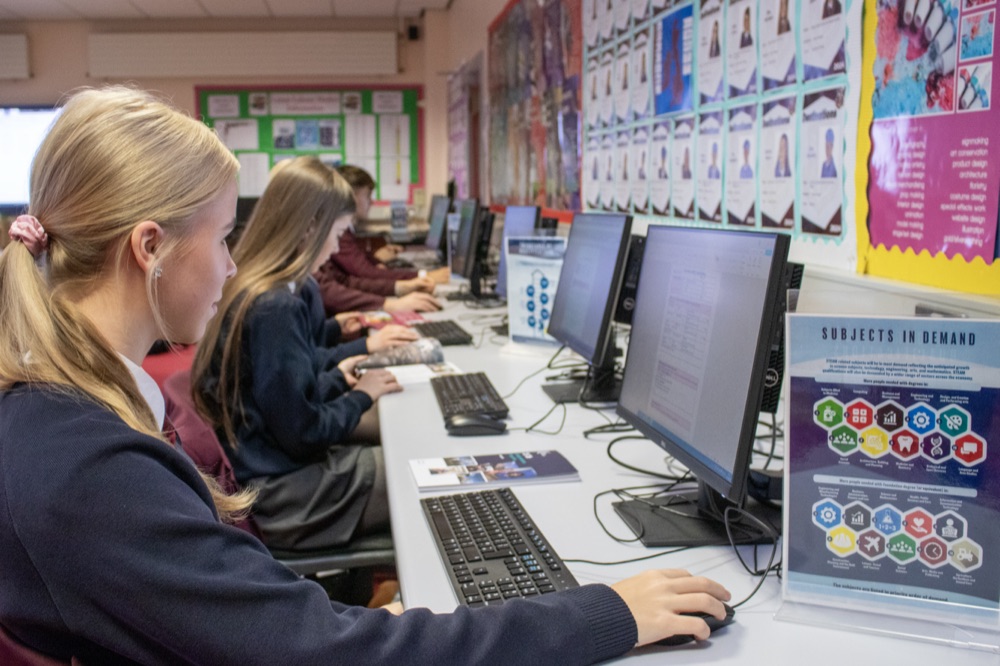
At the end of Year 10, pupils are awarded competence in ‘Using ICT’ at a level which reflects their ability. Pupils regularly complete revision and homework online using the school’s online learning platforms, and provision is made for pupils who do not have access to ICT equipment at home. Pupils are welcome to use computers in the School Library and in the ICT suite before and after school.
More about Year 8 ICT on stpauls728.org
At GCSE: Years 11 and 12
GCSE Computer Science
How it is assessed
- Unit 1: Computer Systems: written examination (50%)
- Unit 2: Computational Thinking, Algorithms and Programming: examination (50%)
What helps you succeed
- Enjoying problem-solving
- Thinking abstractly, ahead, procedurally, logically and concurrently
Where it leads
Software development, computer programming, systems analysis, computer science, network management, database administration, ICT technician work and teaching Computer Studies.
GCSE Digital Technology
Assessed by two written papers and one controlled assessment.
Units
- Unit 1: Digital Technology (examination, 30%)
- Unit 2: Digital Authoring Concepts (examination, 40%)
- Unit 3: Digital Authoring Practice (controlled assessment, 30%)
What helps you succeed
- Interest in current and emerging technologies
- Self-management, working with others, presentation, communication and self-improvement
- Being creative
Where it leads
Most occupations need ICT skills. GCSE Digital Technology leads directly to A Level Digital Technology and on to careers in the IT industry: programming, IT engineering, systems analysis, computer games development and more.
OCN NI Level 2 Certificate in Information Technology Applications
Two or three units are completed in Year 11 and two or three in Year 12.
Units
- Email software skills
- Spreadsheet software
- Presentation software
- User fundamentals
- Database software
What helps you succeed
- A love of using computers
- Enthusiasm for creating digital assets
- A willingness to work hard and a determination to achieve
Where it leads
It appeals to pupils with creative flair who are interested in a career in the IT industries, for example web and digital communications.
OCN NI Level 2 Certificate in Information Technology Applications
From the KS4 Subject Choice Booklet 2027.
At Post-16: Years 13 and 14
GCE Digital Technology
At AS, pupils explore how complex digital technology systems are developed, and the fundamentals of any system: data representation, computer architecture, software and the user interface. At A2 they study networks, databases, mobile technologies, cloud computing, legislation, and moral and ethical issues, and develop an application that solves a problem for a specified client.
Units
- AS 1: Approaches to System Development: written examination, 1 hour 30 minutes (50% of AS; 20% of A Level)
- AS 2: Fundamentals of Digital Technology: written examination, 1 hour 30 minutes, short and extended questions (50% of AS; 20% of A Level)
- A2 1: Information Systems: written examination, 2 hours 30 minutes (40% of A Level)
- A2 2: Application Development: internal assessment, a portfolio of the analysis, design, development, testing and evaluation of an application for a specified end user (20% of A Level)
What helps you succeed
- A genuine interest in digital technology
- Interest in its effects on individuals, organisations and society, and its social, legal and ethical considerations
- Interest in research and development, and the ability to present findings
Where it leads
IT management, database administration, mobile application and web development, help desk and network administration, video game and graphic design, health information technology, IT security, software engineering, systems analysis, IT project management, programming, user interface development, hardware engineering, computer animation and network architecture.
Level 3 Cambridge Technical Extended Certificate in IT
Develops knowledge and skills in the principles of IT and global information systems: the pace of technological change, IT infrastructure, the global flow of information, and legal and security considerations. The course focuses on developing applications across platforms and sectors: writing specifications, then designing, building, testing and implementing them.
Units
- Fundamentals of IT
- Global Information
- Application Design
- Two further optional units, chosen by the department
What helps you succeed
A love of using computer software to produce an end product, and skills in office software. The course builds the transferable skills universities and employers look for: communication, problem solving, time management, research and analysis.
Where it leads
Employment, further education such as a higher-level college qualification, or higher education such as a degree. Cambridge Technicals carry UCAS tariff points and give a strong base for progression to university.
The department
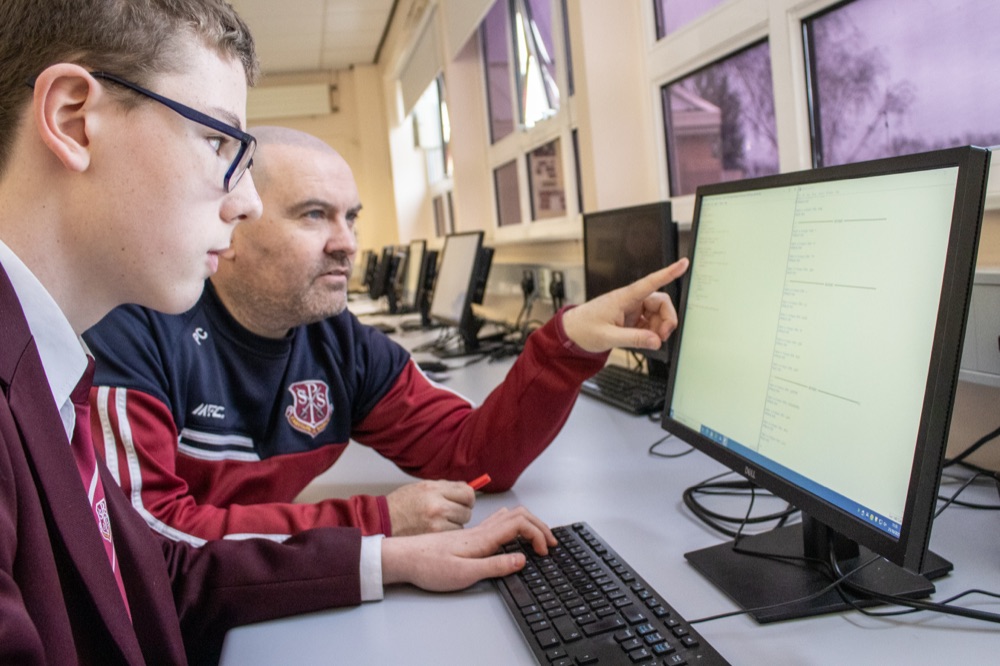
- Miss A RocksHead of Digital Technology & Skills
- Mr P Caldwell
- Ms J Leonard
- Mrs B Murray
- Mrs K Trainor
From the school’s Key Stage 4 Subject Choice 2027 and Post 16 Subject Choice 2026 booklets.